
My Learning Journey
School in Bengaluru looked fine from the outside, but notes would not stick, exams rarely matched what I understood, and college ended quietly in 2009; unofficially I never really stopped learning.
I grew up in Bengaluru, and for a long time school looked like a normal enough story from the outside. I went to class. I came home. On paper nothing was dramatically wrong, except that something as basic as taking notes would not stay in my hands the way it stayed in everyone else’s. I spent years feeling guilty about failing at a task that looked simple to the people around me.
At St Ann’s High School, roughly from 1991 to 2001, I could sit through a lesson and follow the idea well enough in my head, then blank out when it was time to write it down. My mother was working full-time then, and so was my dad, and somehow she still ended up walking with me in the evenings to classmates’ houses so I could copy what I had missed.
My mother came along after work so I could sit at someone else’s dining table and copy the notes I could not take myself.
I had a lot of freedom at home, and I did not know what to do with it. I understood concepts; I just could not turn that into marks when the test paper showed up. For a long time nobody had a useful name for whatever was going on in my head, so it just felt like laziness mixed with shame.
Somewhere in seventh grade I skipped school for months before my parents or the school really caught up with it. I was still allowed to write the exam if I could study on my own, and that was the first time math stopped being a subject I was barely dragging through and became something that clicked when I was left alone with the subject.
No matter who discovers math, 1+1=2 is still true; it felt like the only language that stayed universal when everything else in school was spelling, language, and memory games I kept losing.
I went from barely passing to acing math once I could study it my own way. After that I missed a full school year and spent it at home, mostly on the family PC, learning computers by poking at whatever I could run; Prince of Persia in 2D and Aladdin ate a lot of those hours, and somehow that counted as education more than the classroom had.
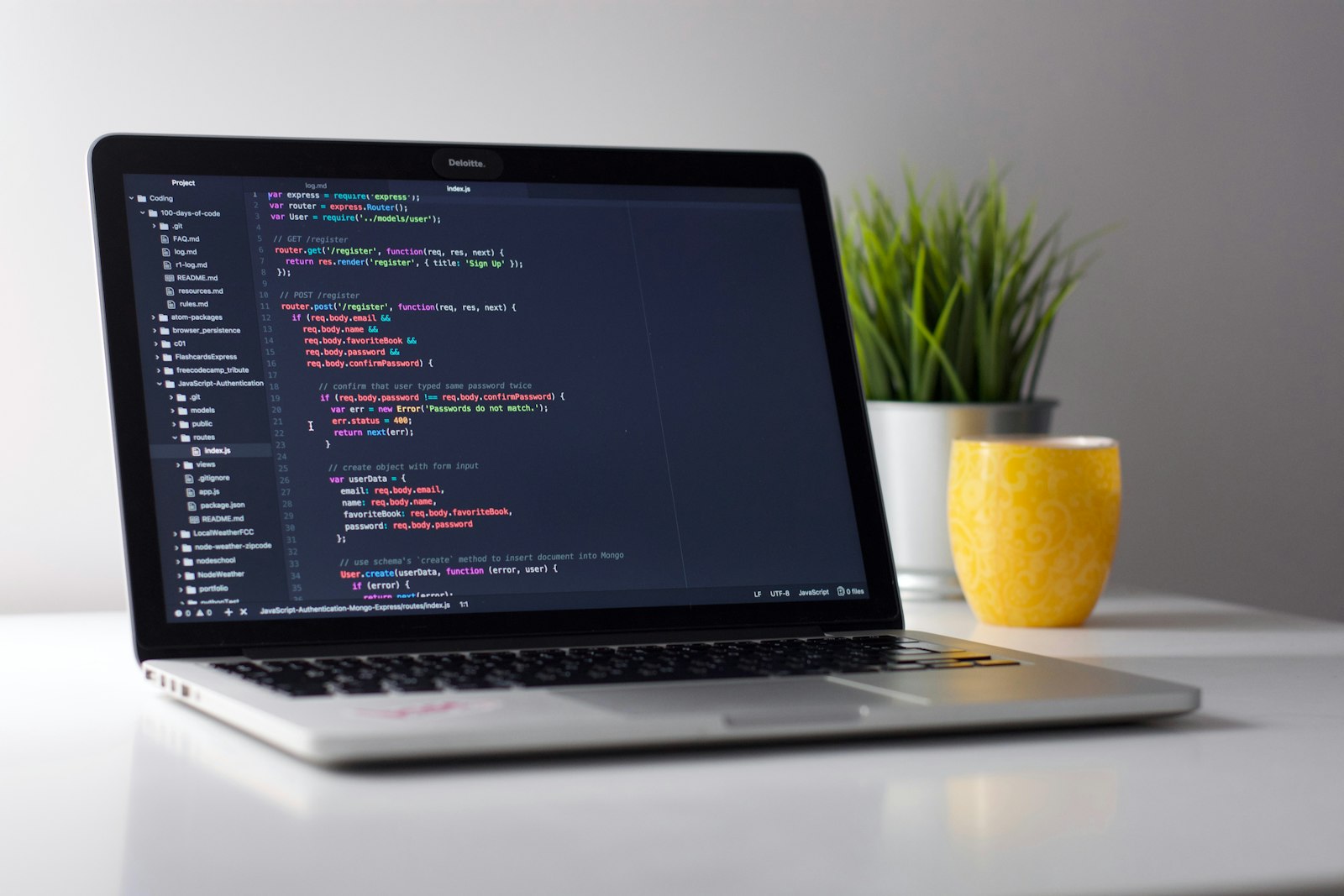
Photo via Unsplash
I joined Gokul English High School for eighth grade. The class had three students, which sounds like a punchline until you live it; with that little noise around me, I finally had room to read almost anything I could find. The school itself did not have a library, but there was one nearby, and I loved picking up comics and then drifting into Isaac Asimov, Ursula K. Le Guin, and Arthur C. Clarke until the membership fees became their own problem.

Photo via Unsplash
I decided, for reasons that only make sense if you are me, that asking my parents for a library membership was somehow worse than the alternative, so I literally stole money for it; usually about INR 10-15 at a time, which was roughly twenty to thirty US cents back then when the rupee sat near forty-five to the dollar. It was a tiny amount and a stupid choice, and I still remember the feeling of treating a library card like contraband.
I was on the Karnataka state board, and on the side I got hold of CBSE syllabus books and worked through those too, which quietly gave me more depth than the classroom alone. English was manageable; Hindi and Kannada were mandatory and miserable, because spelling never stuck and languages in general have never been my strong suit. Math stayed easy once it had clicked.
Home internet arrived around 2003, when I was in ninth grade territory. eBaum’s World, MySpace CSS tinkering, and Yahoo Messenger were where I made my first online friends, which felt more natural than most of the social scripts school expected me to perform in person.
For pre-university I went to R.N.S. Vidyaniketan from 2005 to 2007. Everyone recommended computers because I was already decent with them, and they were probably right, but I was too idealistic for that kind of advice; I still am. I wanted to know how biological systems worked, so I took biology and finished that track.

Photo via Unsplash
Degree admissions were another kind of blind spot. There was a Common Entrance Test you were supposed to sit if you wanted technical or medical seats, and I simply did not know that in time, so I never took it. That closed the door on computer science and on MBBS the way I had half-imagined them. Without CET I looked for what else I actually liked, and landed on an Undergraduate combination of microbiology, biotechnology, and chemistry at Vijaya / BHS, starting in 2007.
I went at it hard. I read the recommended textbooks, then drifted into research papers, and started writing about how recent work contradicted what we were being taught. A kind professor took me out for a walk and told me I should stick to the books for now, and that I had “great potential.”
He meant it kindly, I think, but “great potential” scared me more than any failed exam ever had.
I wanted to stay unknown. I did not want to shake the pot or make a sound. I wanted a quiet life with nothing of note attached to my name. Right after that conversation I dropped out, around January 2009, and that was the end of my official education.
If I could go back, I would tell younger me one practical thing without the idealism filter.
Take the CET. Go for computer science.
Years later, when I was thirty-one in 2019, I finally got a proper name for what school never diagnosed: AuDHD. It does not rewrite the guilt or the stolen library money or the quiet exit from college, but it does explain why notes, languages, and “just sit still and perform” were never the simple tasks people assumed they were.
Unofficially I am still learning things even today, and I will probably, hopefully, be learning for a long time.